

The Role of Specialized Aggregates in Data Center Floor Construction
March 10, 2026
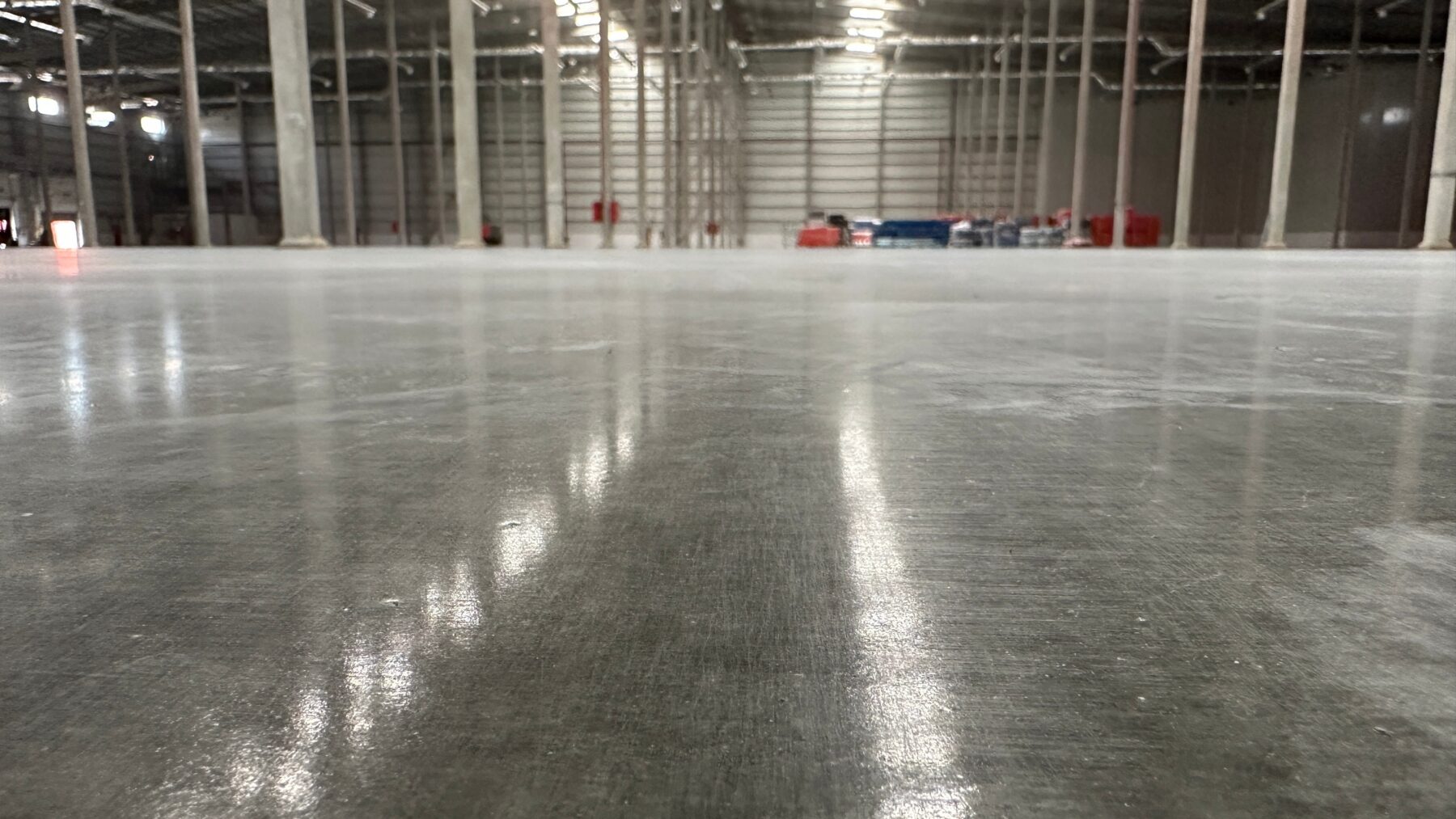
Equipment loads and concentrated point pressures place significant stress on data center floors. Each slab must support static rack weight, rolling system loads, and anchored equipment without internal displacement. In this environment, the floor serves as a structural platform, and the choice of aggregate plays a critical role in determining how the platform performs under operational demands.
Beneath the surface, aggregate gradation and particle shape dictate internal interlock and density. These characteristics control how compressive force spreads through the slab thickness and into the supporting layers below. The mineral composition and abrasion resistance of those aggregates further influence how the concrete reacts to temperature shifts and controlled interior humidity conditions.
Load Distribution Begins with Aggregate Structure
Server racks transfer thousands of pounds into limited contact points. That force moves through the cement paste and into the aggregate matrix embedded within the slab. Angular, well-graded crushed stone creates mechanical interlock that resists internal shifting when compressive stress increases. Rounded or gap-graded materials move more freely under repeated loading cycles, introducing microcracking within the paste and surface instability over time. Controlled gradation distributes point loads across a broader internal structure, reducing localized stress concentrations within the slab cross section.
Managing Shrinkage and Crack Control
Hydration and moisture loss generate internal shrinkage strain during curing. In data center environments, even narrow cracks can disrupt coatings, cable tray systems, and electrostatic control measures. Increasing aggregate volume reduces the proportion of cement paste, the component most susceptible to shrinkage movement. Dense, properly sized aggregates create internal restraint that limits crack width and spacing across expansive floor plates. Mechanical systems within the facility introduce subtle temperature variation, and aggregates with stable mineral composition limit internal stress shifts as expansion and contraction cycles occur.
Vibration Control and Equipment Stability
Mechanical equipment generates continuous vibration, even at low amplitude. That energy travels through the slab mass and into the substructure. High specific gravity aggregates increase slab weight, which dampens vibration waves and reduces amplitude transmission beneath sensitive systems. A tightly bonded aggregate-paste interface further restricts micro movement that can amplify oscillation under repeated equipment cycling.
Subbase preparation reinforces this control. Compacted crushed stone with tight gradation reduces void space and limits post-placement settlement. Stable elevation across the slab footprint preserves equipment alignment and prevents uneven load transfer at anchor points.
Moisture Management from the Ground Up
Moisture vapor migrating from below the slab introduces risk to coatings and static control systems. Subbase aggregates with controlled permeability direct water laterally rather than allowing accumulation beneath the concrete footprint. Proper compaction limits differential settlement while maintaining drainage pathways.
Within the slab itself, dense aggregate structure restricts capillary channels that permit upward moisture travel. Reduced internal permeability strengthens vapor barrier effectiveness and stabilizes interior humidity control systems. The floor assembly functions as an integrated system beginning at the aggregate layer and extending through placement and curing.
Supporting Precision Flatness and Joint Behavior
Tight flatness and levelness tolerances define modern data center construction. Aggregate gradation directly affects how concrete consolidates during placement and finishing. Well-proportioned blends resist segregation and maintain uniform internal distribution across slab depth. That uniformity contributes to predictable joint movement as the slab contracts.
When aggregate distribution remains consistent, stress concentrations at saw-cut joints decrease. Load transfer across joints improves, and dowels interact more effectively with a stable internal structure. Rolling rack movement remains controlled because the slab behaves as a cohesive plate rather than a collection of isolated sections.
Data center infrastructure operates continuously under concentrated load and controlled environmental conditions. Aggregate structure governs how the slab distributes weight, restrains shrinkage, dampens vibration, and manages moisture migration. From subbase compaction through final finishing, material selection defines the floor’s internal behavior under operational demand. Careful aggregate specification shapes a slab that supports data center systems with structural consistency and measurable stability.