

Rural Property Improvements That Start with Gravel: Roads, Pads, Drainage, and Access
May 8, 2026
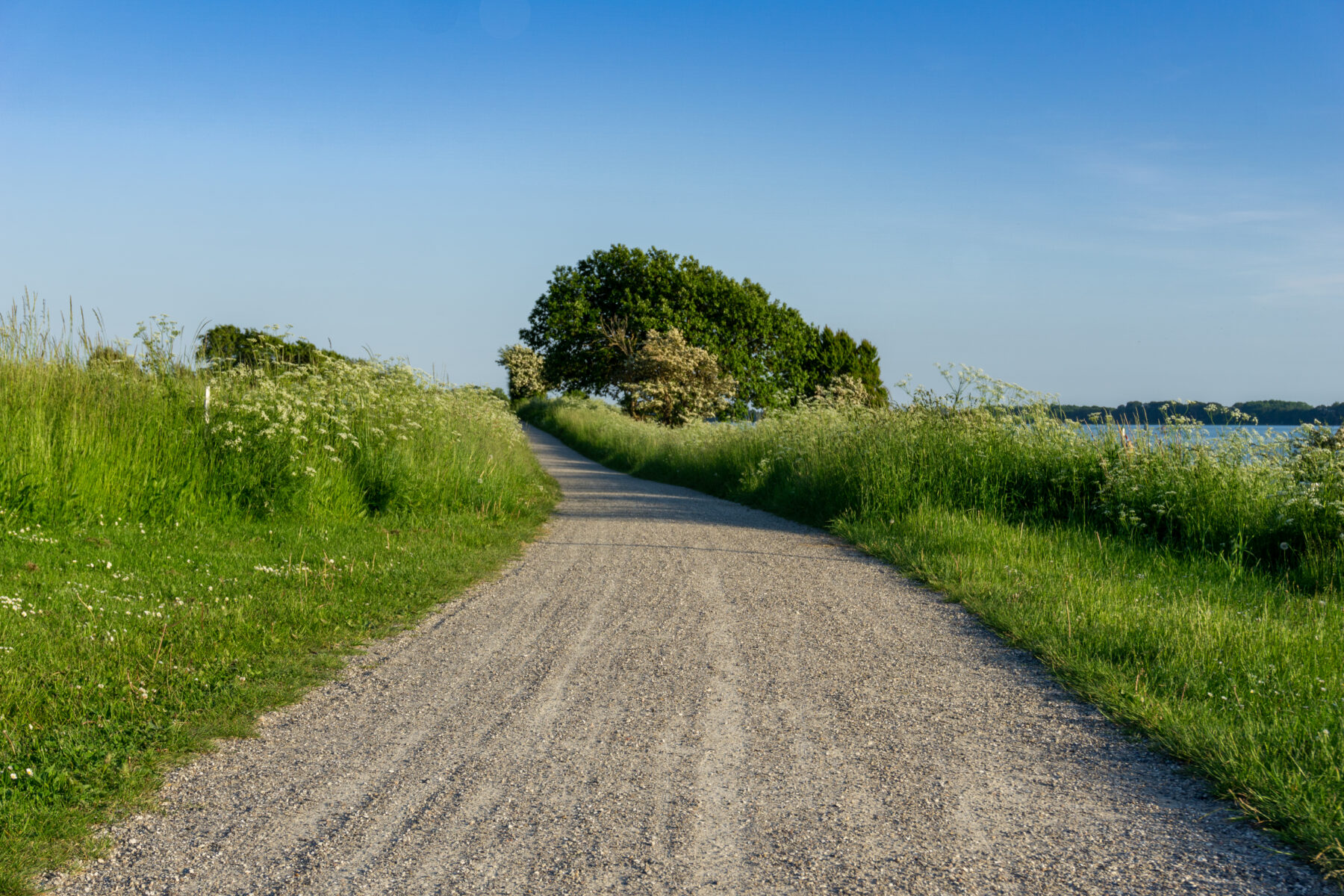
Gravel governs where vehicles can travel, how water moves across the surface, and where heavy equipment can operate without tearing up the ground underneath. Before the fencing is placed, before buildings take shape, before any serious work begins, the ground itself needs to be made correctly, and gravel makes that possible.
Building a Private Road That Handles Real Conditions
Rural driveways and private roads face pressure that suburban paving never encounters. Loaded trailers, livestock haulers, delivery trucks, and seasonal freeze-thaw cycles concentrate stress at an unpaved surface’s most vulnerable points. A compacted layer of crushed limestone or road gravel over a properly graded base resists rutting and washout by interlocking at the contact edges between aggregate particles. Road crown geometry and roadside ditches carry that protection further by moving surface water away before it can soften the base.
Equipment Pads and Working Areas
Farm equipment, skid steers, tractors, and utility vehicles all need somewhere to park, turn, and stage without sinking into soft ground or carving deep ruts that compound into serious hazards across a work season. A compacted gravel pad placed over a properly prepared subgrade keeps heavy equipment stable through wet seasons, preventing the ground deformation that soft soil creates under repeated loading. The depth of the gravel layer depends on subgrade conditions and equipment weight, with most working areas requiring six to eight inches of compacted aggregate above a stable base. Workshop areas, fuel storage zones, and barn aprons follow the same logic: a firm, water-shedding surface that protects both the equipment and the ground beneath it.
Managing Water with Gravel Drainage
Water is the primary force working against most rural property improvements, and gravel addresses that force directly by controlling where water moves. French drain systems built with perforated pipe set in beds of clean washed gravel carry subsurface water away from structures, driveways, and low-lying areas that would otherwise stay saturated for weeks following heavy rain. Surface drainage swales lined with gravel aggregate redirect sheet flow and reduce soil erosion along fence lines and barn areas where concentrated runoff would otherwise cut channels into the earth. Strategic gravel placement at culvert inlets and outlets stabilizes those transition points against scour, keeping drainage infrastructure intact across high-water events.
Access Points and Entry Construction
The approach to a rural property handles more vehicle weight and more frequent ground stress than the surrounding landscape. A gravel entry from the road edge to the gate needs to account for the turning radius of large vehicles, the grade of the approach, and the transition between paved road and unpaved property. Apron construction at the roadway edge requires coordination with local road requirements, but the gravel portion of the approach handles vehicle weight, surface water, and seasonal ground movement better than compacted soil ever could. Gates, cattle guards, and entry markers all anchor into stable ground when the access pad beneath them is built from properly compacted gravel to the right depth.
The groundwork laid before a single structure goes up determines how a rural property holds together through its first season and beyond. Gravel at the road, the pad, the drainage channel, and the entry point is what keeps that foundation stable under the weight and weather that working land demands. Road base, crushed stone, drainage gravel, and apron fill cover the material needs across every phase of a rural build. Reach out to discuss aggregate specifications and get materials staged for delivery.