
Choosing the Right Base Material for Equipment Yards, Storage Pads, and Work Areas
July 1, 2026
Heavy equipment is hard on the ground. Loaded trucks, forklifts and parked machinery put a lot of weight into a small area, and most native soil cannot hold up under that kind of pressure for long. It starts to shift, rut and break down at the surface. The base material you choose from the start makes a real difference. The right one holds up season after season. The wrong one softens after heavy rain and leaves you fixing the same problems again and again.
What the Ground Is Actually Carrying
Before any material gets placed, it is helpful to understand what the surface is forced to face. Equipment yards and storage pads are exposed to static load from parked machinery and dynamic load from vehicles moving across the surface repeatedly. That combination puts consistent stress on the soil beneath, and when moisture enters the picture during the wet seasons, that stress compounds quickly. Clay-heavy native soils are especially prone to displacement under these conditions, making the base layer the critical factor in long-term surface function.
The solution starts below grade, not at the surface. Building the base correctly from the bottom up is the most direct path to a surface that holds its grade and handles load without constant maintenance intervention.
Subbase as the Foundation Layer
Aggregate subbase (ASB) is placed directly on top of native soil and functions as a load-distributing layer before any surface course goes down. Its particle composition a structure that locks together under compaction and spreads vertical load laterally across a wider soil area. This is what keeps heavy axle weights from punching through into unstable ground below. Every size of an ASB produces a different compaction result and matching that to the soil and load conditions determines how the surface responds months later when the ground has settled and traffic patterns have developed.
Base Rock as the Working Layer
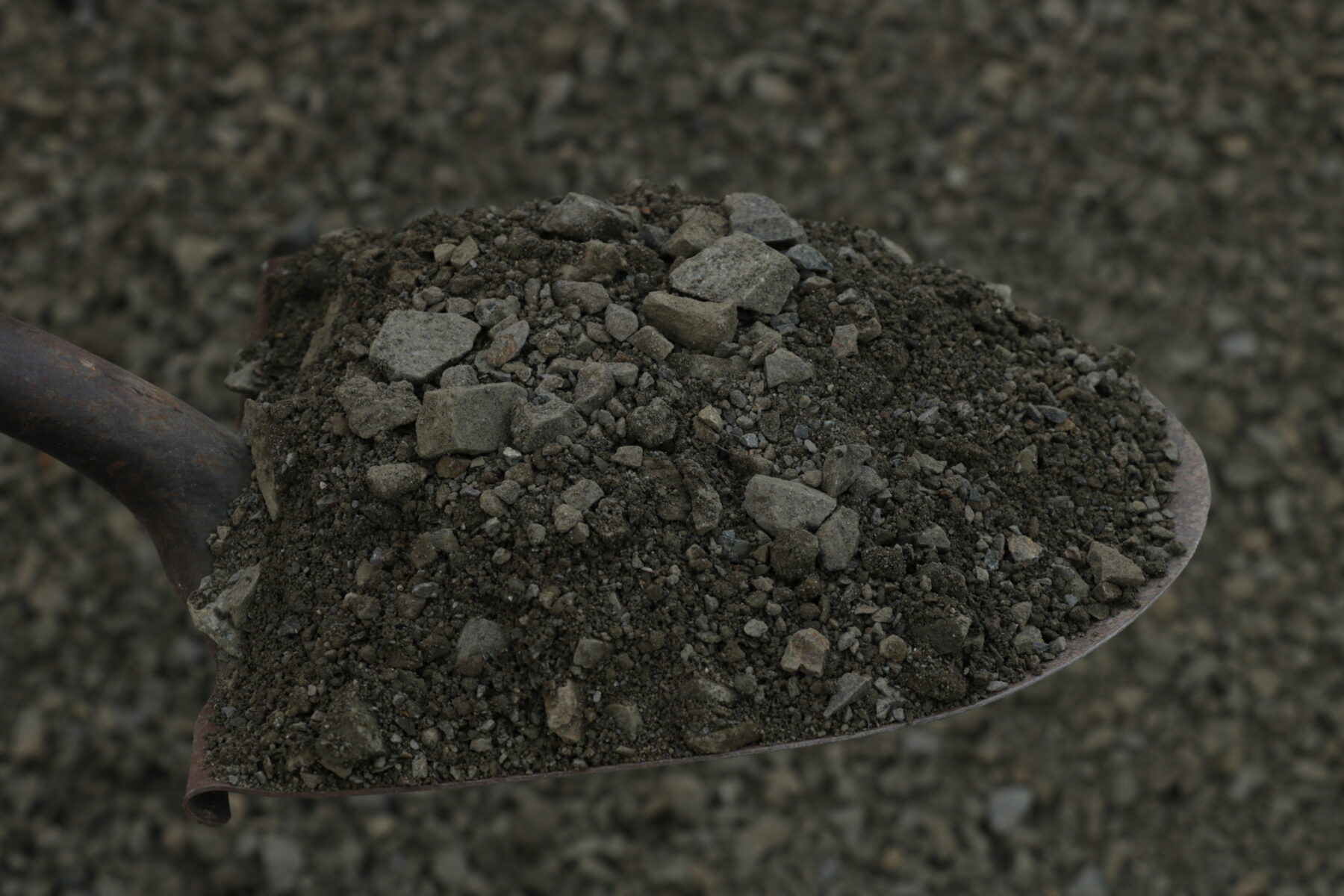
Once subbase is compacted and graded, base rock takes the surface role. Class II aggregate base is a densely graded blend of course and fine particles that bonds together under compaction to form a firm, stable surface capable of taking daily equipment and vehicle traffic without significant deformation. What makes base rock particularly well-suited for equipment yards is how it responds to compaction. The graded particle distribution means fine material fills the voids between larger aggregate as compaction pressure is applied, producing a locked matrix that resists lateral movement. This internal interlock is what keeps the surface from spreading under equipment tires and keeps grade from washing out during heavy rain events.
Recycled CLII Base as a Practical, Sustainable Option
Recycled Class II base rock carries the same structural function as virgin base rock. Sourced from demolished roadways, curbs, gutters, and concrete structures, the material is re-crushed and reprocessed to meet the same grading and quality specifications required of newly mined aggregate.
From a cost standpoint, recycled base rock often delivers the same surface performance at a lower material cost, which matters on larger equipment yards where coverage area significantly increases the volume needed. Color variation is expected given the mixed origins of the source material. However, for functional applications like equipment storage and work pads, surface appearance rarely drives the specification.
Matching Material to the Application
Not every yard or storage pad requires the same build. Low-use staging areas with lighter loads may perform well with a single compacted layer of base rock placed directly on stable native soil. High-traffic equipment yards with heavy axle loads call for the full sequence of native soil graded and compacted, a subbase layer placed and compacted in lifts, and a finished base rock surface. Areas where standing water is a recurring concern may benefit from drain rock positioned beneath the subbase to move moisture away from the load-bearing layers before saturation affects ground support.
The specific size, depth, and material combination comes down to what the surface will carry, how frequently it carries it, and what the native soil conditions look like before any aggregate goes down. Consulting with a material specialist before placement begins keeps the project on track and removes the guesswork from an application. From equipment staging to long-term material storage, the surface underfoot shapes how a yard actually functions. A product consultation can identify the right subbase and base rock combination for the specific conditions on the ground. Reach out today to request a quote from the BoDean Company and get the proper material in place from the start.