

6 Reasons Asphalt Pavement Fails Before Its Expected Lifespan
September 1, 2026
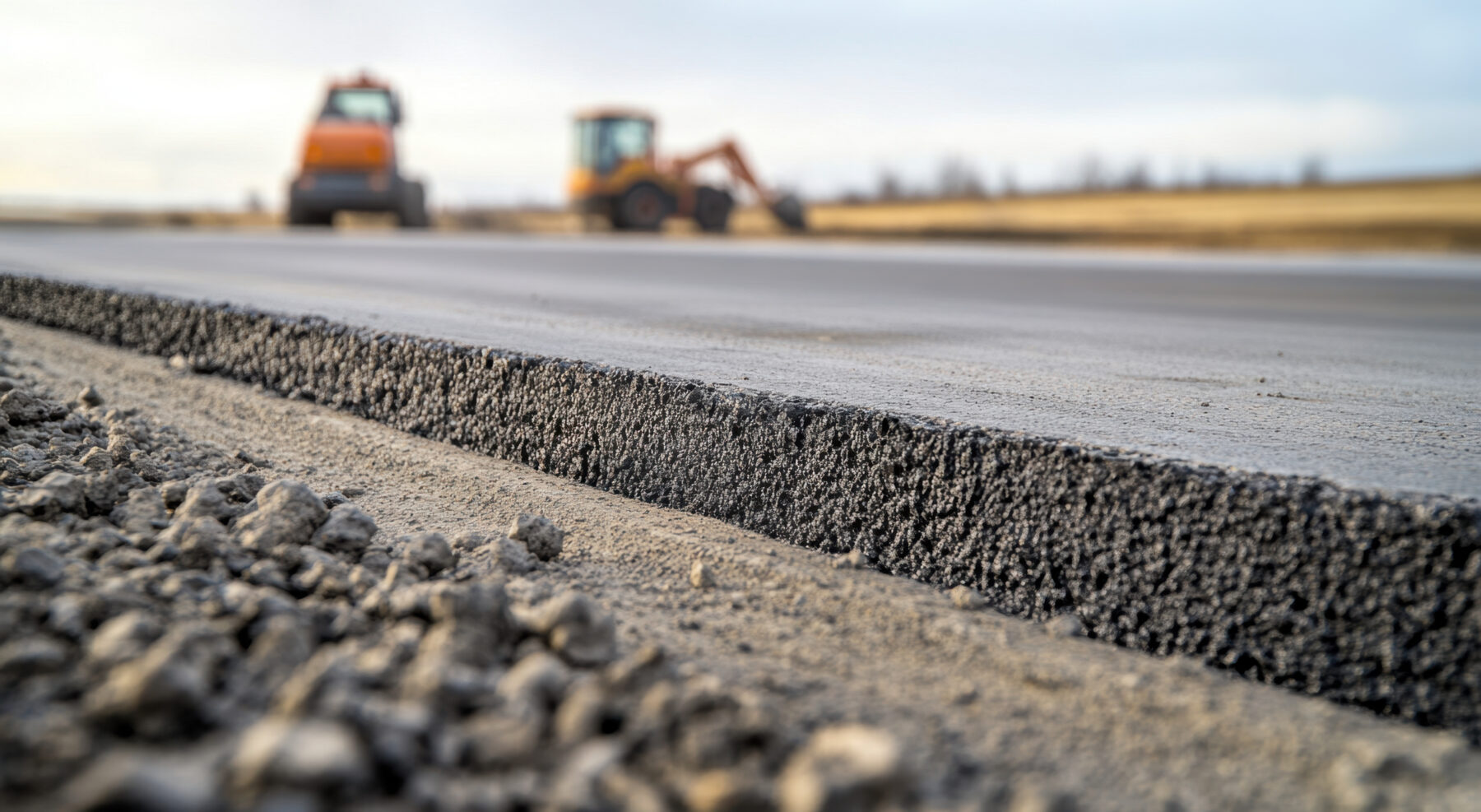
Cracked, rutted asphalt that gives out a decade ahead of schedule rarely fails because of the traffic on top of it. The failure starts underneath, in a base that was never compacted to spec or graded to hold a load. It compounds through a mix that never matched the temperature or weight it had to carry, and through standing water with nowhere to drain that softens every layer below the surface. Add sun that stiffens the binder and small cracks left open through a wet season, and a pavement built to last two decades surrenders half that life to decisions made long before the first truck ever rolled across it. The material choices behind a surface, not the wear on top of it, decide how soon it breaks down.
- How Does Aggregate Base Affect Asphalt Pavement Life?
The base beneath an asphalt mat carries almost all of the structural load, and a mat only lasts as long as the base beneath it holds its shape. When that aggregate base isn’t compacted to spec, or the material itself is poorly graded, wheel loads press unevenly into the layer instead of spreading across a stable platform, and depressions or cracking follow at the surface above. BoDean Company processes base rock and subbase material through a closed-loop wash plant at its Mark West Quarry, removing fines and producing a more consistently graded aggregate for exactly this reason. A base built from washed, well-graded rock holds its shape under repeated loading in a way that inconsistent material cannot.
- Why Does Seasonal Timing Affect Asphalt Mix Design?
Mix design has to match the season it’s placed in, and Sonoma County runs through two very different paving conditions each year: a long, dry summer that pushes surface temperatures well past the air, and a wet winter that narrows the window for placing new asphalt. A mix chosen for one season and installed in the other often leaves voids that let moisture in, or a binder that stiffens before compaction finishes. Warm-mix asphalt, produced at BoDean’s Santa Rosa facility since 2009, injects atomized water into the binder during production, cutting mixing temperatures from over 320 degrees to below 275 degrees and keeping the mix workable into the cooler, wetter months. That extended window is often the difference between a mat that compacts fully and one that doesn’t.
- What Do Traffic Loads Mean for Asphalt Pavement Design?
Traffic load matters just as much as the mix chosen to carry it. Vineyard equipment, harvest trucks, and delivery vehicles serving tasting rooms put far more weight on many Sonoma and Napa surfaces than the passenger cars their original design assumed. A mat built for light traffic flexes differently under a loaded truck or piece of farm equipment, and repeated passes at that higher weight accelerate rutting and cracking well ahead of schedule. Specifying a hot mix suited to the actual traffic a site will carry, rather than a generic residential blend, keeps that mat intact through a full harvest season.
- How Does Wet-Season Drainage Affect Asphalt Pavement?
Water causes as much damage as traffic does, and in Sonoma County it arrives in a tight seasonal window: virtually none falls between July and August, and most of the region’s roughly 32 inches lands between November and March. A pavement section with no clear path for that water to move develops the pooling that works its way into the aggregate base within a few wet seasons, softening the layer that’s supposed to carry load evenly. Porous asphalt gives sites without natural drainage a way to handle that seasonal swing directly, letting water pass through the surface into a crushed rock recharge bed instead of collecting on top of it.
- How Does California Sun Cause Asphalt Binder Oxidation?
Sun exposure works on a surface even when nothing is driving over it. Under sustained UV exposure, the asphalt binder holding aggregate together gradually loses its flexibility and starts to stiffen. That process, called oxidation, shows up first as fine, spiderweb-like cracking across the surface, and it accelerates through a summer that holds dry, sunny conditions for months at a stretch. Warm-mix production keeps that binder at a lower temperature during manufacturing, limiting the aging that would otherwise start before the asphalt ever reaches the site, but the same binder still ages under the sun once the mat is placed and carrying traffic.
- Why Does Deferred Maintenance Shorten Asphalt Pavement Life?
Deferred maintenance decides how much of a surface’s built-in life actually gets used. A hairline crack left open through one wet season rarely fails a surface on its own, but it gives water a path into the base below, and that damage compounds with every season it goes untreated. The choice between hot mix and cold patch asphalt for a smaller repair often decides whether that fix holds through the next wet season or fails within days of it. Catching that first crack early is the cheapest point in a pavement’s life to stop a small repair from becoming a full rebuild.
What Decides a Pavement’s Full Service Life?
A pavement reaches the upper end of its expected service life when each layer is built around the conditions it will actually face. A compacted aggregate base spreads wheel loads below the mat, the asphalt mix responds to placement temperature and traffic, and drainage moves seasonal rainfall away before it can soften the supporting layers. Maintenance then closes the cracks that would otherwise give water a path back into that structure.
BoDean Company supplies aggregate base, hot mix, warm mix, and porous asphalt for paving projects across the area. Matching those materials to a site’s traffic, drainage, placement conditions, and repair needs gives each part of the pavement section a specific job to do. Contact BoDean to determine the material and asphalt mix that fit the conditions of an upcoming project.