

5 Signs an Asphalt Parking Lot May Have a Base or Subgrade Problem
October 1, 2026
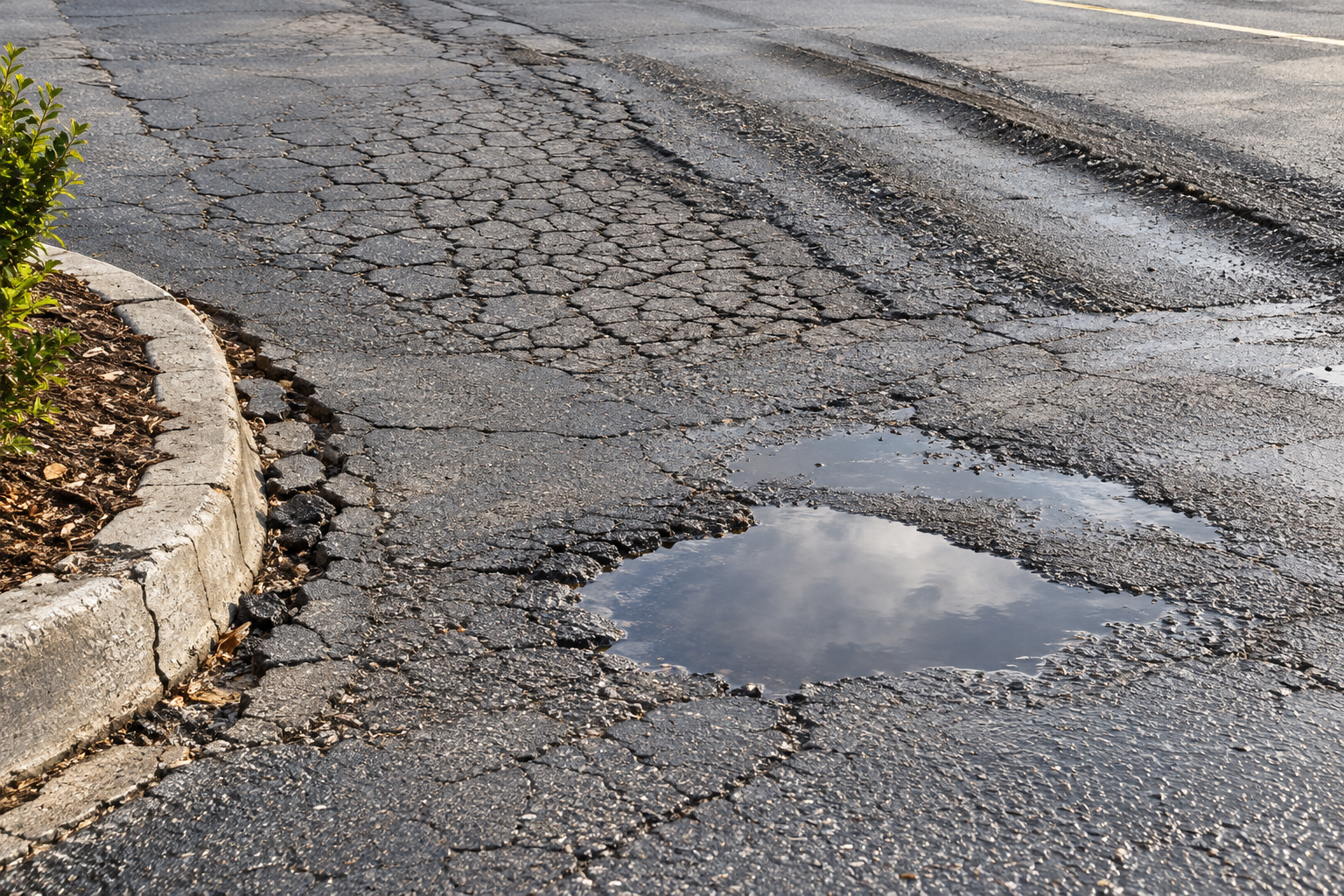
An asphalt parking lot depends on more than the pavement at the surface. When the lot starts to crack, rut, sink, or hold water, the problem often points to a weak base or unstable soil underneath. Those surface changes can help show where support is breaking down and how extensive the repair may need to be.
- Alligator Cracking in Parking Lot Drive Lanes
Alligator cracking in a parking lot’s drive lanes is one of the clearest signs that the base beneath the asphalt has lost support. The cracks form small, many-sided blocks and concentrate where vehicles follow the same path each day. Each passing wheel bends the pavement slightly over a base that no longer holds firm, and that repeated flexing splits the asphalt from the bottom up.
Location separates this pattern from ordinary surface aging. Sun-hardened binder tends to crack evenly across a whole lot, even in stalls that see little weight, while fatigue cracking stays in the wheel paths. A crack sealer can slow water entry into either one, but alligator cracking in a drive lane usually returns until the base below it is rebuilt.
- Wide Ruts at Entrances and Loading Areas
Ruts at parking lot entrances and loading areas, like wheel-path cracking, point to a base or subgrade problem when they are wide and smooth-sided. That shape means the layers under the asphalt have compressed or shifted and carried the surface down with them. Narrow ruts with a ridge of asphalt pushed up alongside them usually trace to a mix that softened in summer heat instead.
Heavy, slow loads decide where structural ruts show up first. Entrances, dumpster enclosures, and truck docks carry vehicles that stop and turn in the same spot, and a base placed at the same depth as the parking stalls often gives out there sooner. A mill and repave over a structural rut, with the base left as it is, tends to bring the dip right back.
- Low Spots That Hold Water
Low spots that hold water after a storm are often the next stage of that same settlement, a sign the ground beneath the asphalt has sunk below its original grade. Parking lots are graded so runoff moves toward inlets and edges, and a birdbath forms wherever part of the base or subgrade has dropped out of that plan. These shallow puddles can start at a fraction of an inch deep and grow as traffic keeps pressing on the soft area.
Once water sits in a birdbath, it feeds the problem that created it. Moisture works through fine cracks at the puddle’s edge and into the aggregate base, which loses stiffness as it saturates. A skin patch can level the low spot for appearance, while a lasting fix removes the wet material and rebuilds the base to the lot’s original slope.
- Broken Edges Along Landscape Islands
Broken edges along landscape islands and uncurbed borders often trace back to water entering the base from the side rather than through the surface. Irrigated planters keep the soil beside the pavement wet through dry months, and that moisture moves sideways into the base under the lot’s outer edge. An edge without a curb also has nothing bracing the base in place, so the asphalt cracks parallel to the border and breaks away under tires.
Edge repairs start with that missing support. Compacted subbase placed as shoulder backing along an uncurbed edge braces the base from the side, and turning spray heads away from the pavement keeps irrigation water out of the layers carrying traffic. The broken strip still needs its damaged base replaced before new asphalt goes down.
- Seasonal Cracking Over a Clay Subgrade
Seasonal cracking over a clay subgrade reaches one layer deeper than the other four signs, into the native soil itself. It shows up as long, wandering cracks and uneven humps that follow no traffic pattern at all. Clay-heavy soils swell as they take on water and shrink as they dry, and a climate with wet winters and long, dry summers puts that clay through the full cycle every year.
Clay movement starts below the aggregate base, so resurfacing alone leaves the cause in place. A deeper section of compacted Class II aggregate base, commonly in 3/4-inch or 1-1/2-inch gradations, spreads wheel loads across more soil and puts a buffer of stable rock between the asphalt and the clay. Some sites also need the clay itself treated or replaced, a decision that usually follows soil testing.
How to Confirm a Base or Subgrade Problem
A base or subgrade problem is confirmed below the pavement, since surface patterns only narrow the search. Core samples and small test cuts show how thick the asphalt and base actually are and how firm the soil sits beneath them. Wheel-path cracks and ruts tend to point at the base, birdbaths and broken edges show where water is getting in, and seasonal heaving reaches down to the soil.
That answer sets the scope of the repair. An overlay placed over a failed base carries the same cracks and dips up into the new surface, while a full-depth repair removes the weak material and rebuilds the section from compacted rock upward. The same subgrade checks that go into preparing a property for new asphalt work apply just as much to a lot already showing these signs.
BoDean Company produces Class II base rock and subbase at its Mark West and Forestville quarries, along with hot mix asphalt for the surface that goes back on top. Request a quote to match base material and asphalt to an upcoming parking lot repair.